Nantucket sleigh ride
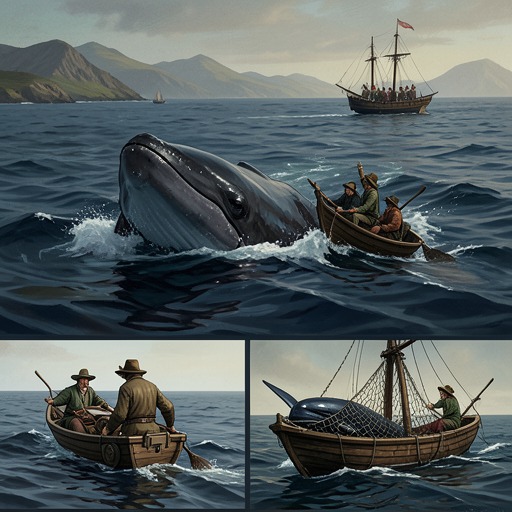
The WhaleThe Nantucket sleigh ride names the moment when a harpooned whale, still powerful enough to flee, tows its pursuers across the water. The phrase gives a familiar pleasure ride a perilous reversal: the whaleboat’s crew are not steering their course but being dragged by the animal they mean to kill.
The Tow Begins
The ride follows the harpoon and the struggle on the line. Six men at one end feel the resistance of a sixty-ton whale at the other, hauling against it as it fights to escape. When the enraged animal surfaces, its buoyant, oil-filled head rises above the water and its narrow jaw cuts through it; the creature Ishmael describes as sluggish now becomes as pointed and swift as a pilot boat.
Speed and Reversal
The whale tows the boat at twenty-six miles an hour, which the account calls the fastest any man had travelled on water. Ishmael’s image of “whole Atlantics and Pacifics” seeming to pass as the boat shoots onward enlarges the ride beyond a local chase: the sea itself appears to stream past. Yet the speed is not a human achievement. The men’s intimate connection to their prey, transmitted through the taut line, makes them passengers in the whale’s flight.
A Dangerous Interlude in the Hunt
The name’s suggestion of a ride is sharply at odds with the danger surrounding it. The whale may take hours to tire, and the tow belongs to a contest in which the animal can still turn on the whaleboat. Only when it weakens can the crew draw alongside and attempt the killing stroke. The Nantucket sleigh ride thus marks a temporary reversal of power within the hunt: the hunted whale dictates the movement, while the hunters endure its force and wait for the chance to regain control.